CAIXA Accessibility Guide · Criteria for interface reviews
I built a Figma guide so CAIXA’s designers and developers could find and discuss accessibility criteria before submitting interfaces for final review.
Barriers surfaced when the interface was already built
The criteria lived in documents that were hard to consult while designing. When final review surfaced a barrier, the team had to revisit an interface it had already implemented. I brought the reference into Figma and organized each page around the criterion, what to check and who needed to act.
The criterion needed to make ownership clear
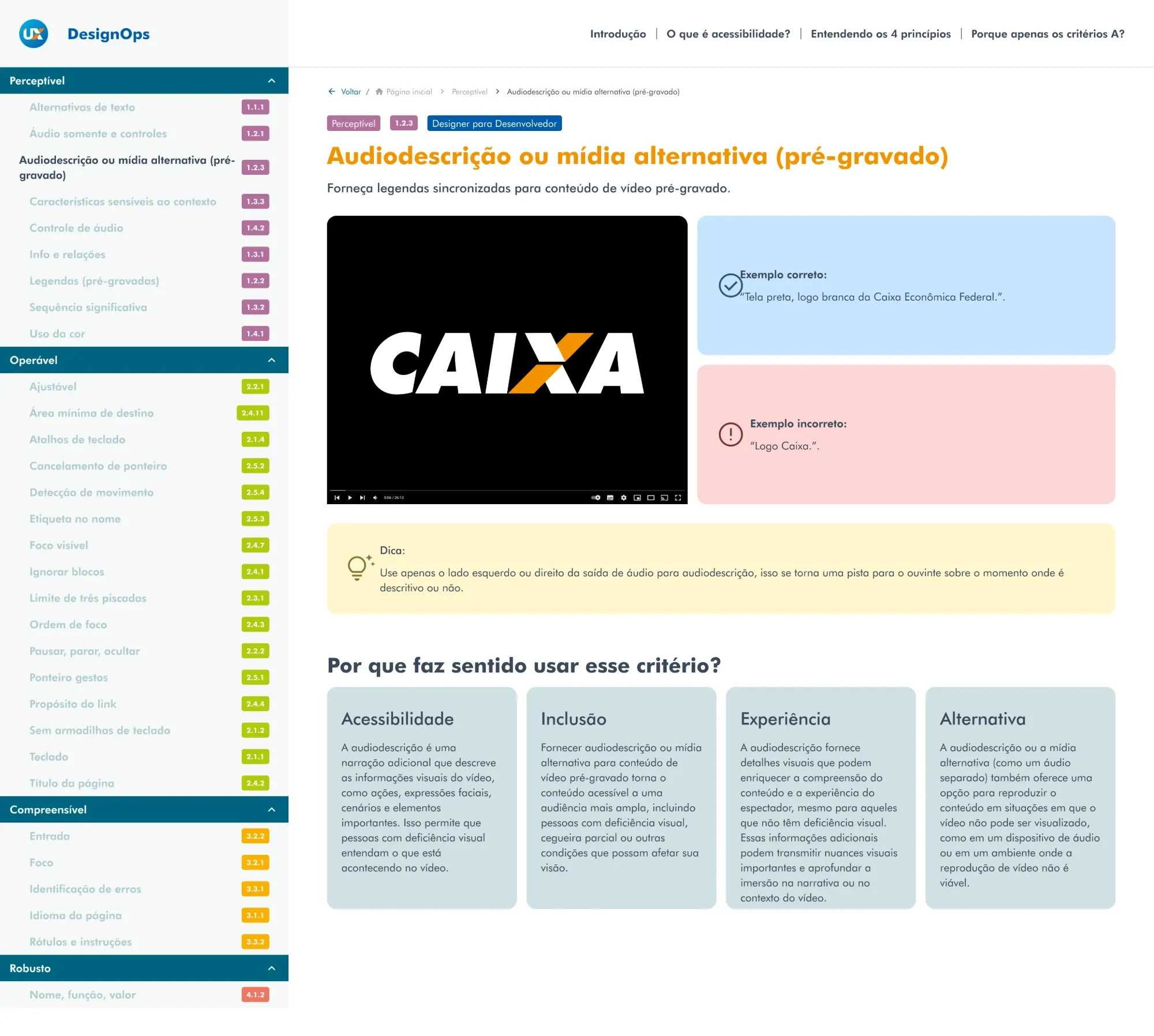
I used labels to indicate who needed to act on each criterion. The audio description page marks a handoff from design to development. The example helps the team decide which visual information needs describing and how to make it available in the video.
The historical capture has a sentence about captions below its heading. WCAG 2.1 criterion 1.2.3 covers audio description or a media alternative for prerecorded content.
Workshops showed where teams needed instructions
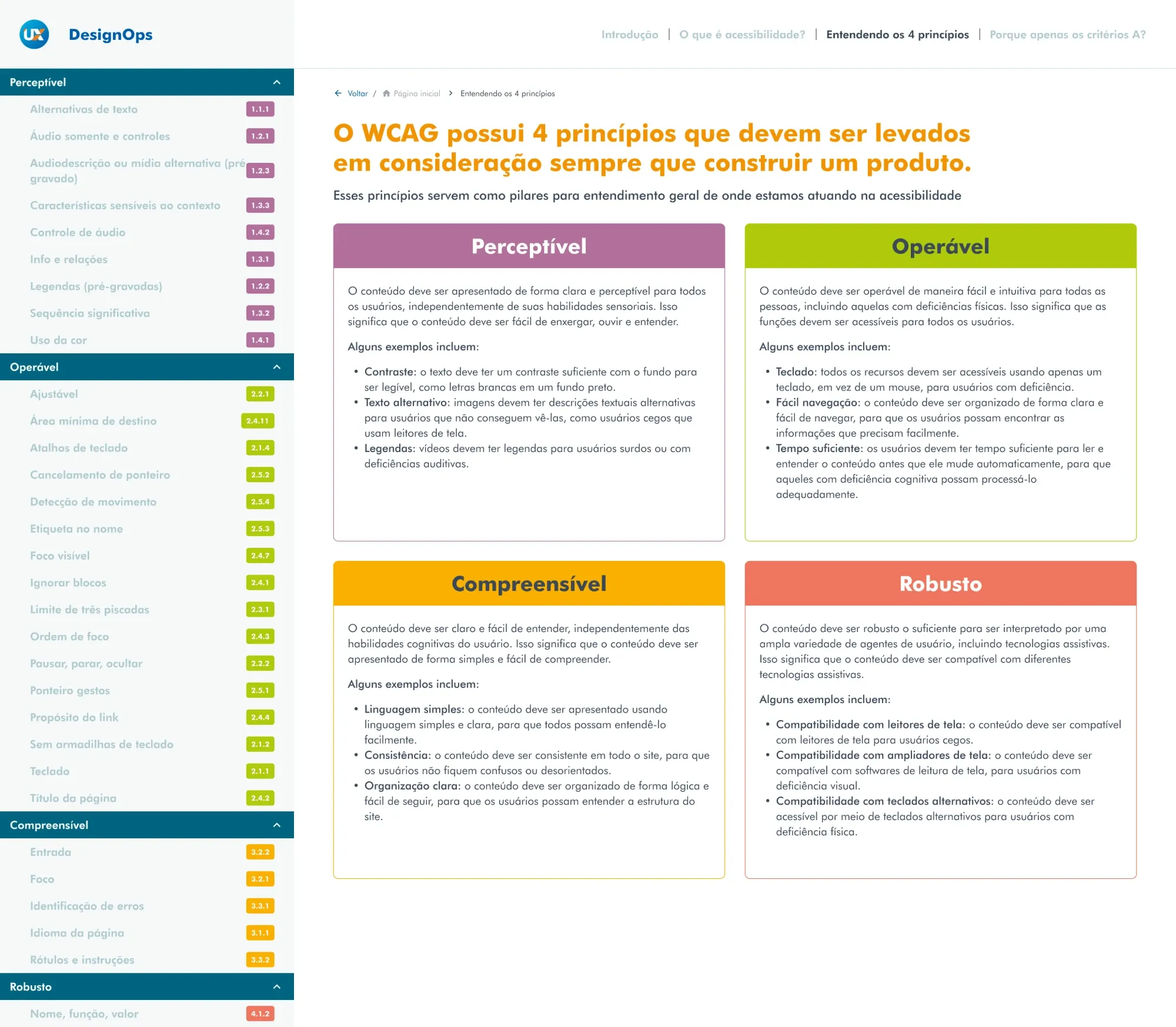
I organized WCAG’s four principles in Figma and listed criteria by name and number. Teams could open the item that applied to the interface they were reviewing.
During workshops, questions about checking contrast and using a screen reader showed where the index needed practical guidance. I added checks using Figma plugins and Chrome DevTools.

Examples put the criterion in a real use case
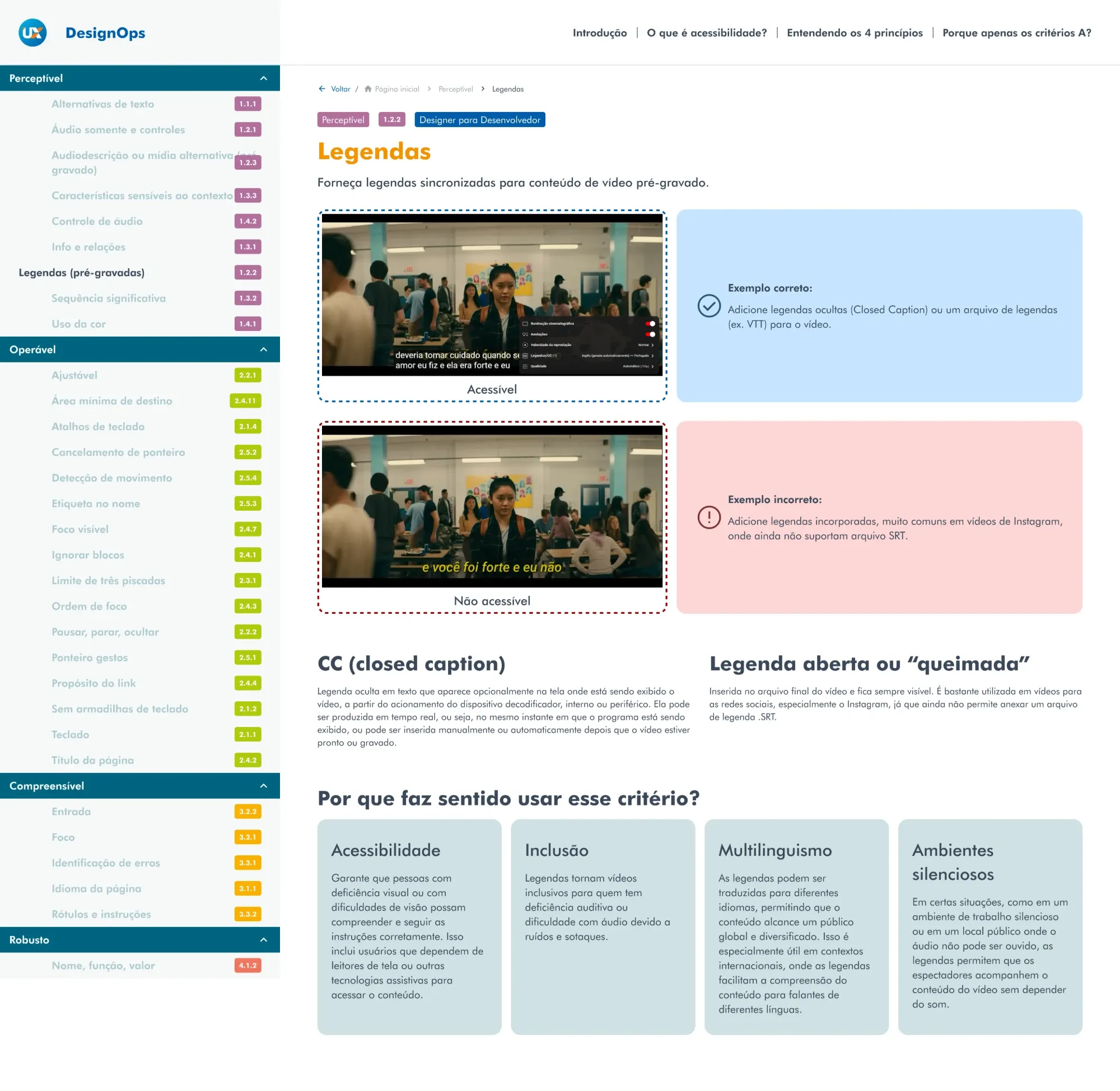
To discuss captions, I put two versions of the same clip on one page. Designers and developers could look at what a viewer needs to follow the video without hearing the audio.
The historical capture marks open captions as incorrect. W3C’s guidance for criterion 1.2.2 accepts open or closed captions when they are synchronized and convey relevant speech and sounds.
An error message affects accessibility and security
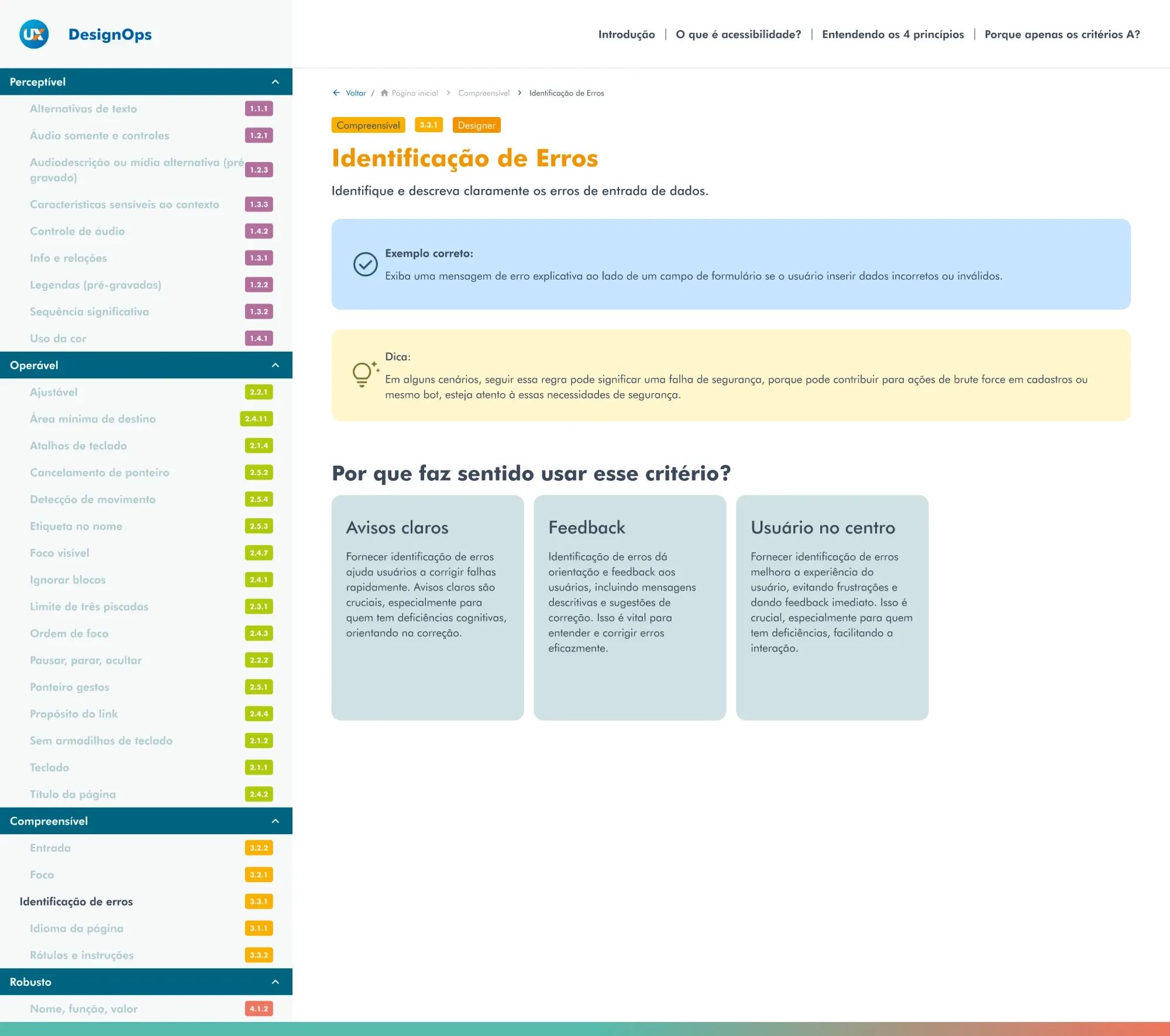
For error identification, I recorded a decision that design and engineering needed to make together. The message had to help people correct their entry while protecting sensitive information. The guide brought both concerns into the same interface review.
What changed
The captures document the guide’s navigable criteria, examples and responsibility labels. Adoption by 60 designers across four software vendors is reported. The available material leaves the effect on fixes at final review and on people with disabilities unmeasured.
- 30+
criteria documented in the guide, with interface examples
Evidence: Deliverable - 60
designers across 4 software vendors reportedly adopted the guide
Evidence: Reported
Sources and limits
The count of more than 30 criteria describes the guide delivered. Reported use included ongoing and planned products. The population, period and counting method for adoption are outside the public record.
The guide was published in Figma. The images show project material. The cover on the home page is an illustrative AI composition.
To assess impact, I would track barriers fixed at each stage and test product flows with people with disabilities.
How to read the level of evidence
- Evidence: Deliverable
- Something that exists and was delivered. It describes the work, not an outcome.
- Evidence: Reported
- Stated by me or by stakeholders, with no published data.
Updated .
Hiring a Senior Product Designer or DesignOps Lead?
I am available immediately, 100% remote. Let's talk about how I can help your product.